Home / Procedures / Disc Replacement
Motion-Preserving Spine Surgery

Northwest Indiana's Artificial Disc Replacement Specialist

Cervical and lumbar artificial disc replacement — a motion-preserving alternative to spinal fusion. Dr. Tyndall is a pioneer in fusion-less spine surgery, performing same-day disc replacement with the clinically proven prodisc® system to relieve pain while keeping your spine moving naturally.

Medically reviewed by Dwight S. Tyndall, MD, FAAOS · Updated August 2026

What Is Disc Replacement?

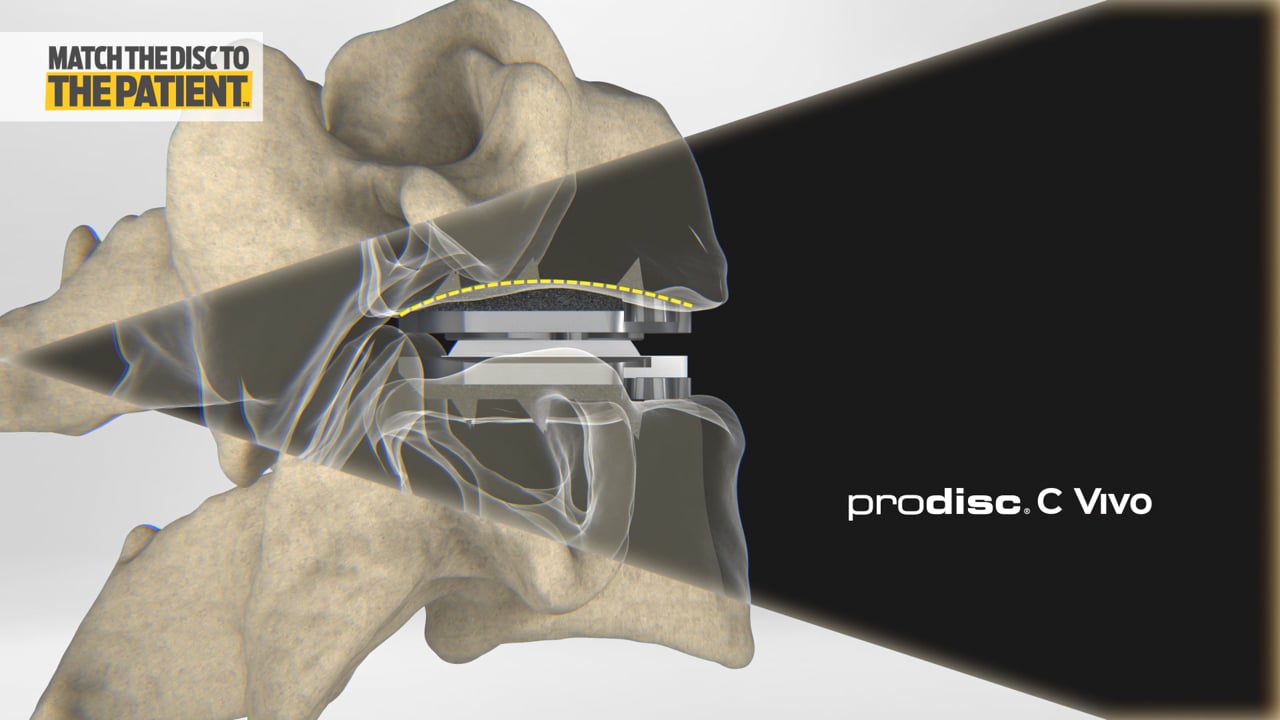
Artificial disc replacement is a surgical procedure in which a damaged or degenerated spinal disc is removed and replaced with a prosthetic implant designed to replicate the natural movement of a healthy disc. Unlike spinal fusion, which permanently locks two vertebrae together, disc replacement preserves motion at the treated level.

The artificial disc is engineered to mimic the function of a healthy natural disc, allowing the spine to flex, extend, and rotate as it normally would. This motion-preserving approach reduces stress on the discs and joints above and below the surgical level, potentially lowering the risk of future problems at adjacent segments — a significant advantage over traditional fusion.

Dr. Tyndall has worked directly with implant companies in developing disc replacement technology and has extensive experience performing both cervical disc replacement (neck) and lumbar disc replacement (lower back). Many of these procedures can be performed as outpatient surgery, allowing patients to go home the same day.

Explore Your Procedure

Disc replacement in the neck and the low back are different procedures with different implants. Choose yours for details, videos, and recovery timelines.
Frequently Asked Questions About Disc Replacement

Disc replacement removes the damaged disc and replaces it with an artificial device that preserves natural spinal motion. Spinal fusion permanently joins two or more vertebrae together, eliminating motion at that segment. Disc replacement reduces the risk of adjacent segment disease, a condition where the levels above and below a fusion degenerate faster due to increased stress. Dr. Tyndall evaluates each patient individually to determine which approach will provide the best long-term outcome.
Ideal candidates typically have a symptomatic damaged or degenerated disc at one or two levels, have failed conservative treatment for at least six weeks, do not have significant facet joint arthritis or spinal instability, and have adequate bone density. Dr. Tyndall performs a thorough evaluation including imaging studies and physical examination to determine whether disc replacement is appropriate for your specific condition.
Most patients experience significant pain relief within the first few days. Many return to light activities within 1 to 2 weeks (cervical) or 2 to 4 weeks (lumbar), and to most normal activities within 4 to 6 weeks, with full recovery over 3 to 6 months. Because there is no need to wait for bone to fuse, functional recovery is often faster than with traditional spinal fusion. Dr. Tyndall's minimally invasive approach further speeds recovery by minimizing muscle and tissue disruption.
Modern artificial discs are designed to last decades. Long-term clinical studies have followed patients for over 15 years with excellent results and device longevity. The materials used, such as medical-grade cobalt-chromium alloy and ultra-high-molecular-weight polyethylene, are engineered to withstand the demands of spinal motion over a lifetime. Dr. Tyndall uses proven implant designs with extensive clinical track records.
Yes. Dr. Tyndall performs many disc replacements as outpatient procedures, allowing patients to go home the same day. He was among the first surgeons in Indiana to offer outpatient minimally invasive spine surgery using computerized navigation technology. Eligibility for outpatient surgery depends on your overall health and the specifics of your procedure.
Disc replacement treats symptomatic degenerative disc disease, herniated discs that have not responded to conservative treatment, and cervical or lumbar disc degeneration causing neck pain, back pain, or radiating arm or leg pain. It is not appropriate for patients with spinal instability, significant facet joint disease, osteoporosis, or deformity such as scoliosis. Dr. Tyndall evaluates each patient thoroughly to determine the most effective treatment approach.

Schedule Your Disc Replacement Consultation

Find out if disc replacement is right for you. Dr. Tyndall offers personalized evaluations and the latest motion-preserving spine technology. Call today to schedule your consultation.

(219) 250-5035

Monday – Friday · 8:00 AM – 5:00 PM

Crown Point Office

500 E. 109th Avenue
Crown Point, IN 46307

Schererville Office

833 W. Lincoln Highway, Suite 110
Schererville, IN 46375